

Reverse Osmosis vs. Carbon Filters
Which Is Right for Your Home?
When it comes to improving your home’s water quality, Reverse Osmosis (RO) systems and carbon filters are two of the most common options. But they work very differently — and choosing the right one depends on your water source, goals, and budget. Here’s how they compare.

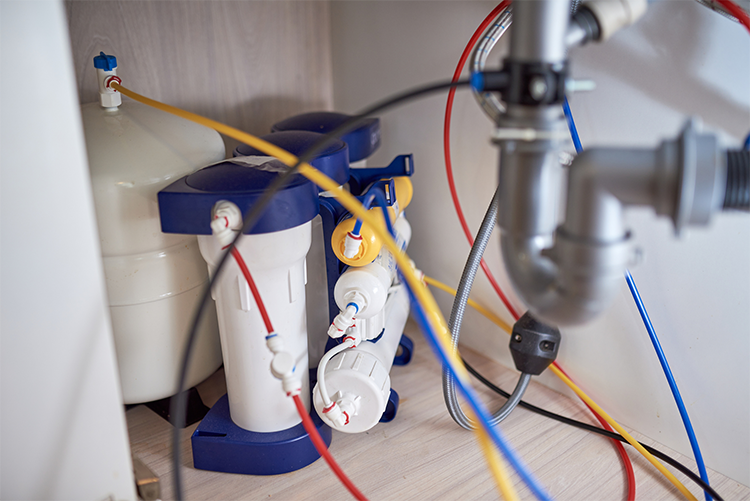
Point-of-use filtration for optimal water quality
RO systems use a semi-permeable membrane to filter out up to 99% of dissolved solids, including heavy metals, fluoride, arsenic, and even some bacteria. These are a great choice if you want superior drinking water quality at a dedicated faucet
Benefits
- Exceptionally pure drinking water
- Removes a wide range of contaminants
- Great for water supplies with high TDS levels
Considerations
- Not available for whole-house filtration
- Slower filtration rate
- Produces some wastewat
Whole-house filtration for taste and odor
Activated carbon filters absorb chlorine, pesticides, and organic compounds, improving the taste and smell of water.
Benefits
- Ideal for both whole-house and under-sink use
- More affordable and easier to install
- Faster water flow rate
Considerations
- Doesn’t remove dissolved solids or heavy metals
- Less effective against viruses and bacteria
Which Filtration System Should You Choose?
Still unsure which water treatment option is best for your home? Here’s a quick breakdown of when we typically recommend each system.
-
Choose Reverse Osmosis If:
You want advanced contaminant removal, especially for drinking water or if you’re on a private well. -
Choose Carbon Filtration If:
You’re mainly targeting taste, odor, and chlorine, especially for municipal water users. -
Choose Both If:
You want it all: whole-home protection from chlorine, sediment, and odor, plus the cleanest, best-tasting water right at your kitchen tap.